

Rabbit
Rabbits make fantastic pets
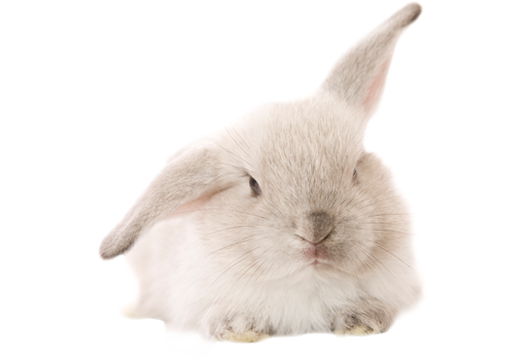
Rabbits as Pets
Rabbits make wonderful pets. They are sweet animals with specific needs when it comes to nutrition and care. If you have a rabbit or are thinking about getting one, make sure you have all the necessary information. For example, did you know that rabbits, just like dogs and cats, need to be examined and vaccinated regularly?
We’re happy to help you by providing information on things to keep in mind when caring for a rabbit.
Caring for Your Rabbit(s)
Rabbits are friendly and intelligent pets that, like all other pets, need proper care and attention. Although they are often seen as good pets for children, there is quite a lot involved in caring for them. The decision to get rabbits should therefore be viewed as a long-term commitment. The average life expectancy is 8 to 12 years, but with proper care, rabbits can live even longer. In general, medium and large breeds tend to have shorter lifespans than dwarf breeds. There are more than 60 rabbit breeds, in all shapes, sizes, and colors.
To properly care for rabbits, you need a suitable
living environment where they can behave naturally, a healthy diet, good healthcare, and companionship. Rabbits are social animals, so if you’re getting a rabbit for the first time, it’s actually best to get at least two!
Frequently Asked Questions About Rabbits
What should I look for when choosing a rabbit?
- You can buy a rabbit from a breeder or adopt one from a shelter or rescue organization. If you’re planning to buy a rabbit, it’s a good idea to keep a few things in mind. If you have any questions, don’t hesitate to ask the seller.
- The eyes and nose should be clear and free of discharge (which may indicate an infection).
- The rabbit should be curious and inquisitive.
- The rabbit should not be too thin. Run your hand along its spine, hips, and ribs to check—the bones should not protrude and should be covered by a reasonable layer of muscle.
- Check for wetness or caked feces around the anus.
- Check for parasites such as fleas or ticks by parting the fur on the back with your fingers, and check the inside of the ears for redness or an excessive amount of yellow or brown earwax—this may indicate ear mites.
- If possible, gently pull the lips apart and check to make sure the rabbit's front teeth (incisors) aren't broken or too long.
- Find out if the rabbit has been spayed or neutered; as a rule, this isn't done until they are about six months old.
- Ask about the rabbit's age. Do not buy a rabbit younger than 8 weeks.
- Find out if the rabbit has been vaccinated against myxomatosis and viral hemorrhagic syndrome (VHS). VHS is also known as rabbit hemorrhagic disease (RHD) or viral hemorrhagic disease (VHD).
- Ask the seller if there is a health guarantee or a money-back guarantee.
- Finally, ask what the rabbit is being fed to avoid suddenly giving it different food at home, as this can cause gastrointestinal problems and diarrhea.
Should I get one or two rabbits?
All rabbits need the company of at least one other rabbit. Rabbits are naturally social animals and become stressed when kept alone in a hutch. The rabbits do need to be compatible: the best combination is a neutered male and a spayed female.
What requirements must a rabbit hutch meet?
Rabbits are intelligent, curious, active, and athletic animals that need to be able to jump, run, stretch, dig, and stand upright on their hind legs. A hutch or cage should always be as large as possible. It’s less important to worry about the exact dimensions as long as you ensure your rabbit has enough space and opportunities (inside or outside the cage or hutch) to do what it would normally do. Rabbits can be kept indoors or outdoors and should always have a safe living environment where they can run around freely. A place where the rabbit can rest and feel safe is also important. Rabbits kept indoors can easily be house-trained. However, they love to gnaw and dig and can destroy your furniture, cables, and carpeting. Keep a close eye on your rabbit when it’s roaming freely and provide a cage or hutch for nighttime or when you’re away. It’s also wise to take precautions to prevent your rabbit from chewing on electrical cords—a potentially life-threatening activity! You can help your rabbit satisfy its natural urge to dig by providing old towels or blankets, or a small sandbox filled with soil or pieces of tree bark.
Although rabbits are usually kept outdoors in a hutch, this should be more than just a safe place that protects your rabbit from the elements and where it can rest safely. Your rabbit also needs space where it can roam freely, such as a run or a fenced-in area of the yard with some grass. You can place boxes in this area to serve as hiding spots, for example.
Indoors, rabbits can be kept on soft towels or paper shreds. Outdoors, you can use wood shavings, straw, or hay. Straw is more suitable than hay, because hay gets crushed easily and has fewer heat-insulating properties. Barley straw is recommended because it is softer than wheat or oat straw and is less likely to damage the rabbits’ eyes. Never use dusty or moldy straw, as this can cause respiratory problems. It is best not to use sawdust at all, as it is dusty and can irritate the eyes. The bedding must always be dry and clean, and soiled areas should be changed regularly.
It’s important for your rabbit to have plenty to do and lots of toys to play with so it doesn’t get bored. Fortunately, this is easy and inexpensive: you can use everyday items, such as plant pots and boxes.
How do I house-train my rabbit(s)?
Rabbits are fairly easy to house-train because they naturally tend to urinate in the same spot. To start, keep your rabbits in a small, enclosed area (a cage or a fenced-off part of the room). Place a “rabbit toilet” in a corner where the rabbits already relieve themselves. The sides of the box should be low enough so your rabbits can easily get in and out. Use newspaper, straw, or another paper-based bedding. Do not use cat litter, as some types can be harmful if eaten. You can place a few droppings in the rabbit box to encourage your rabbits to use it.
How often should I clean the rabbit hutch?
It’s very important to keep your rabbits as clean as possible, especially if they’re outside during the summer. You should check your rabbits twice a day for caked-on droppings around the base of their tails. This is because flies can lay eggs in caked-on droppings. The maggots (which sometimes hatch from the fly eggs within a day) feed not only on the caked-on droppings but also on the rabbits themselves. This is a very painful and often life-threatening situation that can easily be prevented by removing any caked-on droppings around the base of the tail twice a day. Clean the hutch at least twice a week and remove urine-soaked bedding every day if possible. The hutch can be cleaned with a diluted disinfectant.
What is the best ambient temperature for my rabbits?
Indoors, you should keep your rabbits in the coolest and least humid part of the house. The optimal room temperature for rabbits is 15–21°C. Rabbits cannot sweat or pant, and if the ambient temperature exceeds 27°C, they can suffer from heatstroke. Outdoors, rabbits also need shade in the summer. Do not place the hutch in direct sunlight if the rabbit cannot get out, as it may overheat. Outdoors, rabbits must be protected from drafts, wind, and driving rain, as well as from dogs, cats, and other predators. In winter, provide plenty of straw as bedding and cover the front of the hutch with a blanket at night so your rabbits do not get chilled. Water bowls and bottles must be changed daily in winter, as they can freeze.
How should I pick up my rabbit?
Rabbits do NOT like being picked up. So only pick up a rabbit when it’s absolutely necessary. If a rabbit is scared or feels insecure when being picked up, it may kick with its hind legs and damage its spine, which can result in paralysis. When picking up your rabbit, always support its hindquarters to prevent spinal injury. Hold the rabbit with one hand under its chest between its front legs, lift it with your other hand under its hindquarters, and hold it close to you so it feels safe. You can tuck its head under your arm. Never pick up a rabbit by its ears, and do not let its legs dangle. It is often best to kneel down to the rabbit’s level, pet it, and let it come to you; or gently place it on your lap while sitting on the floor, rather than lifting the rabbit off the floor.
Should I have my rabbits spayed or neutered?
Unless you want to breed rabbits, it is highly recommended that you have both males (bucks) and females (does) spayed or neutered.
Rabbits reach sexual maturity between 3 months (for smaller breeds) and 6–9 months (for larger breeds). It is recommended to separate young rabbits into same-sex groups starting at 3 months of age.
Reproduction is prevented by castrating rams and spaying ewes when they are about 5–6 months old (or, in males, as soon as the testicles have descended). Spaying doesies significantly reduces the risk of future uterine cancer; in some breeds, this type of cancer occurs in over 80% of doesies older than 4 years. Spaying also prevents doesies from exhibiting territorial behavior, frequently wanting to fight with other rabbits, and becoming aggressive toward people.
Unneutered bucks are more likely to develop behavioral problems, such as fighting, biting, and spraying. Their urine can also become very smelly. However, spayed or neutered rabbits are more prone to becoming overweight as they age, so it’s important to make sure they don’t eat too much and get enough exercise.
Vaccination and Medical Examinations
Your rabbit must be vaccinated against viral hemorrhagic syndrome (abbreviated as VHS) and myxomatosis. VHS is also known as rabbit hemorrhagic disease (RHD) or viral hemorrhagic disease (VHD). Myxomatosis and VHS can be fatal in unvaccinated rabbits, and there is no specific treatment for either of these two diseases. The only protection you can provide for your rabbit is vaccination.
VHS is spread through direct contact between rabbits (both wild and domestic), but infection with the virus can also occur indirectly through humans, clothing, shoes, other objects, and fleas. Myxomatosis is usually spread by fleas and other biting insects such as mosquitoes and is therefore easily transmitted from wild rabbits to domestic rabbits. A combined myxomatosis-VHS vaccination can be administered as early as 5 weeks of age, followed by a booster shot every 12 months. Our practice would be happy to provide you with more information about vaccination and flea control.
Annual Health Checkup
The best way to prevent health problems in your rabbits is through regular health checkups. Ideally, these should take place once a year, at the same time as vaccinations. Your rabbit will undergo a thorough examination, which may include checking its teeth (especially at the back of the mouth) for signs of “malocclusion” (when the upper and lower jaws do not fit together properly). Malocclusion can cause snagging on the molars and lead to tongue sores.
Rabbits known to have dental problems should be examined more frequently—at least every 6 to 8 weeks. Your rabbit will need to be anesthetized for a thorough dental examination.
Frequently Asked Questions About Myxomatosis and VHS
Myxomatosis and viral hemorrhagic syndrome (abbreviated as VHS) are two serious (but preventable) infectious diseases in rabbits. VHS is also known as rabbit hemorrhagic disease (RHD) or viral hemorrhagic disease (VHD). Below you will find answers to some frequently asked questions about both diseases and advice on how to protect your pet.
What are the symptoms?
Myxomatosis is caused by a virus. When an animal is infected, the first signs are thick, moist swellings on the head and muzzle. Other classic symptoms include “sleepy eyes,” swollen lips, small swellings on the inside of the ear, and thick swellings around the anus and genitalia. Within a few days, these swellings can become so severe that they can cause blindness. Eating and drinking become increasingly difficult, and the disease usually leads to death within 12 days.
VHS is also caused by a virus, although it is a different virus than the myxomatosis virus. The course of the disease is also very different. Most rabbits infected with VHS die very quickly, without showing any visible signs of illness, apart from a period of a few hours during which they are lethargic and listless. In rabbits that survive longer, symptoms can vary widely. Possible symptoms include fever and convulsions, after which the rabbit falls into a fatal coma and dies within 12 to 36 hours. In some cases, bloody discharge from the nose is observed shortly before death.
Is my rabbit at risk?
All rabbits can become infected with myxomatosis and VHS, whether they live indoors or outdoors.
How is the disease spread?
Myxomatosis is primarily transmitted by blood-sucking insects such as the rabbit flea and also by mosquitoes. However, because this virus can also be spread through direct contact between rabbits, controlling blood-sucking insects alone is not sufficient to prevent the spread of the disease.
The VHS virus is shed in the urine, feces, and respiratory secretions of infected rabbits and spreads rapidly to other animals, either through direct contact or as a result of the virus—which is so resilient that it can survive in the environment for many months—being transmitted via contaminated clothing, cages, water, straw,
hay, feed bowls, and other objects.
How quickly does my rabbit get sick?
With myxomatosis, it takes 5 to 14 days for symptoms of the disease to become apparent. The incubation period for VHS is much shorter, usually between 1 and 3 days. Another characteristic of VHS is that the course of the disease is much more acute and that many animals do not show any clear symptoms prior to their death.
What is the survival rate for rabbits after infection?
In general, a severe myxomatosis infection in a susceptible rabbit leads to death within 12 days, often as a result of a secondary lung infection. Rabbits infected with myxomatosis can sometimes survive for weeks or even months after infection. Not all infected rabbits die, although in the wild, less than 10% survive.
Rabbits infected with VHS, on the other hand, generally succumb much more quickly—usually within 12 to 36 hours after the first signs of illness appear (although in most cases there will be no obvious signs of illness, apart from lethargy and listlessness).
How can these diseases be combated?
There are two ways to do this:
Control of parasitic insects (especially in cases of myxomatosis)
Myxomatosis is generally spread by blood-sucking insects, which is why controlling fleas and mosquitoes is crucial. Since myxomatosis can also be transmitted through direct contact, it is recommended to keep wild rabbits away from your rabbits and to use flea control products such as spot-on treatments and sprays. Controlling mosquitoes is more difficult, but insect repellent strips and nets (mosquito nets) can be used for this purpose. Dry bedding also helps control mosquitoes.
- Vaccination (against both myxomatosis and VHS)
There is a vaccine available to protect your rabbit against myxomatosis and VHS. A single vaccination will make your pet immune to both diseases. A booster shot must be given every year. We’d be happy to provide you with more information about vaccination against myxomatosis and VHS.
You can find more information on this topic on this page.
Other Common Medical Problems
Overgrown Teeth and Malocclusion (see also HERE)
This is the most common problem, since a rabbit’s teeth continue to grow throughout its entire life and must be worn down by eating to maintain the correct length. If the diet does not contain enough fiber or the teeth do not align properly (malocclusion), they become too long. Overgrown teeth develop hooks that can pierce the cheek and tongue, causing severe pain, mouth infections, and sores. The rabbit is also no longer able to pick up and eat food. Clinical symptoms include loss of appetite, weight loss, drooling, and abscesses on the muzzle and jaw. Eye infections and caked droppings around the base of the tail can also be signs of dental problems.
In some rabbit breeds, malocclusion of the front incisors is congenital. These rabbits will require regular treatment throughout their lives; another option is to have the teeth extracted. Acquired malocclusion occurs in older rabbits and is likely primarily related to diet. A proper diet is essential for your rabbit’s well-being (see the chapter on nutrition). Problems mainly arise if your pet does not eat enough fiber in the form of hay, grass, or plant leaves to wear down its teeth quickly enough. Problems can also arise if your rabbit refuses to eat the pellets in a muesli mix, as these pellets contain calcium and phosphorus, which are essential for proper bone and tooth development. Your rabbit’s teeth should be checked regularly, preferably at the same time as vaccinations.
Skin Diseases
Ear mites are small parasites that live in a rabbit’s ear canal. They can cause excessive earwax production, accompanied by clinical symptoms such as head shaking, ear scratching, and blood around the ear canal. This is most common in lop-eared breeds.Other mites cause dry skin and dandruff on the back and shoulders. These can also cause a mild rash in humans, so rabbits with mites should be treated promptly.If the bedding isn’t changed regularly (at least once a week), your rabbit’s feet may develop sores and become infected, especially if the rabbit is also overweight. The feet should be checked regularly, and the nails trimmed as needed. With the right technique, this isn’t difficult; we’d be happy to demonstrate it for you once.
Eye Disorders
Rabbits can develop eye infections that are difficult to treat. These manifest as a milky discharge from the corner of the eye and can cause painful, red skin just below the lower eyelid (conjunctivitis). The tear ducts become blocked and must be flushed out. This most commonly occurs due to abnormally growing tooth roots.
Diarrhea
Diarrhea is a common problem in domestic rabbits. This condition can be life-threatening, so you should contact the clinic immediately. Some gastrointestinal infections that cause diarrhea can be fatal within 24 hours. Rabbits with diarrhea become dehydrated quickly and must be given fluids. Sometimes this must be done via an IV. A high-fiber diet (hay or grass) also helps prevent diarrhea and soft droppings.
Overweight rabbits, older rabbits with leg or back problems, and rabbits with dental issues sometimes have caked droppings around the base of their tails. It’s normal for rabbits to produce softer droppings at night, which they then eat—this is an important part of a rabbit’s diet—but if a rabbit is significantly overweight or has a sore mouth or back, it may not be able to reach far enough to “clean up” these droppings.
In the summer, diarrhea or caked-on soft droppings can attract flies, which lay their eggs around the base of the tail. Maggots hatch from these eggs. The maggots (which sometimes hatch from the fly eggs within a day) feed not only on the caked-on droppings but also on the rabbits themselves. This is a very painful and often life-threatening situation. In the summer, you should check your rabbit twice a day and always make sure the bedding is clean and dry. Our practice has various methods to prevent this difficult problem, but the most important things are hygiene and prompt treatment of any associated health issues.
Respiratory Infections
Many rabbits carry Pasteurella bacteria in their nasal passages. In rabbits with a healthy immune system, these bacteria do not cause any signs of illness. However, if a rabbit becomes stressed, these bacteria can multiply rapidly and cause the disease Pasteurellosis, or “snot.” Pasteurella can also cause infections of the respiratory tract, uterus, skin, kidneys, bladder, tear ducts, middle ear, and spine. Clinical symptoms include discharge from the eyes and nose, loss of appetite, lethargy, tilted head, loss of balance, paralysis of the hind legs, and labored breathing. The infection cannot be cured but can sometimes be controlled with antibiotics. Please contact our practice if you think your rabbit has this disease. Other bacterial infections can also cause respiratory disorders.
E. cuniculi
Encephalitozoon cuniculi is a microscopic parasite that can cause a number of diseases in rabbits, including seizures and kidney disease. A common condition caused by E. cuniculi is the sudden onset of torticollis. In some cases, the rabbit may lie on only one side, with its head turned in the opposite direction. E. cuniculi can also affect the internal structures of the eye and cause (partial) blindness. However, not all rabbits that carry E. cuniculi show symptoms of the disease. Many appear healthy, even though they can still infect other rabbits. The parasite is transmitted through infected urine or from mother to offspring and can survive in the environment for several weeks. In places where many rabbits live together, the risk of infection is high, even when good hygiene is observed. Exposure to the parasite can be detected through a blood test; fecal or urine tests can determine whether a rabbit is also shedding the parasite. E. cuniculi also affects other species, such as guinea pigs kept together with rabbits. E. cuniculi does not infect healthy humans, but people with severely compromised immune systems should avoid exposure, as it can cause health problems in them. E. cuniculi is treatable, but severe cases may not respond to treatment. Please contact our practice; we’d be happy to tell you more about routine treatment for all new rabbits or other testing and treatment regimens.
Overweight
Overweight is common in domestic rabbits, especially in females. This can lead to other problems, such as caked droppings and maggots, fatty liver disease, arthritis, osteoporosis, urinary tract infections, and metabolic disorders. Prevention is important, and it’s essential to pay close attention to your rabbit’s diet and ensure it gets enough exercise. Please contact the clinic before putting your rabbit on a diet.
Anesthesia for Rabbits
Many owners are concerned about the risks of anesthesia for rabbits. In the past, rabbits were known to be difficult to anesthetize safely. However, spaying and neutering rabbits is now a routine procedure, and with modern medications and the current expertise of veterinarians, there is no reason to be overly concerned. All anesthetics carry a small risk, regardless of the animal, but every effort is made to ensure that your rabbit’s anesthesia is as safe as possible.
You can read more about medical problems in rabbits here.
Summary
Rabbits make great pets—they’re calm, clean, curious, entertaining, and responsive.
The most important factors for good health are:
- Make sure to eat a healthy, high-fiber diet—this can help prevent many common diseases.
- Have your rabbits spayed or neutered (both males and females).
- Bring your rabbits to the clinic for their annual health checkup
- Have your rabbits vaccinated against myxomatosis and RHD every year
- With the right care, you can enjoy your rabbits for years to come!