

Vaccination
Your rabbit needs to be vaccinated
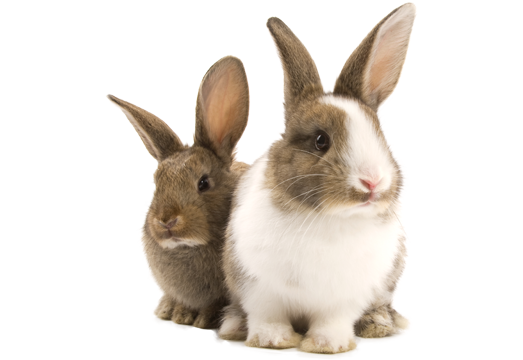
Vaccinations
Your rabbit must be vaccinated against viral hemorrhagic syndrome (abbreviated as VHS) and myxomatosis. VHS is also known as rabbit hemorrhagic disease (RHD) or viral hemorrhagic disease (VHD). Myxomatosis and VHS can be fatal in unvaccinated rabbits, and there is no specific treatment for either of these diseases. The only protection you can provide your rabbit is vaccination.
VHS is spread through direct contact between rabbits (both wild and domestic), but infection with the virus can also occur indirectly via people, clothing, shoes, other objects, and fleas. Myxomatosis is usually spread by fleas and other biting insects such as mosquitoes and is therefore easily transmitted from wild rabbits to domestic rabbits. A combined myxomatosis-VHS vaccination can be administered as early as 5 weeks of age, followed by a booster shot every 12 months. Our practice would be happy to provide you with more information about vaccination and flea control.
Annual Health Checkup
The best way to prevent health problems in your rabbits is through regular health checkups. Ideally, these should take place once a year, at the same time as vaccinations. Your rabbit will then undergo a thorough examination, which may include checking its teeth (especially at the back of the mouth) for signs of “malocclusion” (when the upper and lower jaws do not fit together properly). Malocclusion can cause snagging on the molars and lead to tongue sores.
Rabbits known to have dental problems should be checked more frequently—at least every 6 to 8 weeks. For a comprehensive dental examination, your rabbit will need to be anesthetized.
Myxomatosis and VSH
Myxomatosis and viral hemorrhagic syndrome (abbreviated as VHS) are two serious (but preventable) infectious diseases in rabbits. VHS is also known as rabbit hemorrhagic disease (RHD) or viral hemorrhagic disease (VHD). Below you will find answers to some frequently asked questions about both diseases and advice on how to protect your pet.
What are the symptoms?
- Is my rabbit at risk?
- How is the disease spread?
- How quickly will my rabbit get sick?
- What is the survival rate for rabbits after infection?
- How can these diseases be combated?
How is the disease spread?
Myxomatosis is primarily transmitted by blood-sucking insects such as the rabbit flea and also by mosquitoes. However, because this virus can also be spread through direct contact between rabbits, controlling blood-sucking insects alone is not sufficient to prevent the spread of the disease.
The VHS virus is excreted in the urine, feces, and respiratory secretions of infected rabbits and spreads rapidly to other animals, either through direct contact or as a result of the virus—which is so resilient that it can survive in the environment for many months—spreading via contaminated clothing, cages, water, straw,
hay, feed bowls, and other objects.
How quickly will my rabbit get sick?
With myxomatosis, it takes 5 to 14 days for the symptoms of the disease to become apparent. The incubation period for VHS is much shorter, usually between 1 and 3 days. Another characteristic of VHS is that the course of the disease is much more acute and that many animals do not show any clear symptoms prior to their death.
What is the survival rate for rabbits after infection?
In general, a severe myxomatosis infection in a susceptible rabbit leads to death within 12 days, often as a result of a secondary lung infection. Rabbits infected with myxomatosis can sometimes survive for weeks or even months after infection. Not all infected rabbits die, although in the wild, less than 10% survive.
Rabbits infected with VHS, on the other hand, generally succumb much more quickly—usually within 12 to 36 hours after the first signs of illness appear (although in most cases there will be no obvious signs of illness, apart from lethargy and listlessness).
How can these diseases be combated?
There are two ways to do this:
- Controlling Parasitic Insects (Especially in Cases of Myxomatosis)
Myxomatosis is generally spread by blood-sucking insects, and in this context, controlling fleas and mosquitoes is crucial. Since myxomatosis can also be transmitted through direct contact, it is recommended to keep wild rabbits away from your rabbits and to use flea control products such as spot-on treatments and sprays. Controlling mosquitoes is more difficult, but insect repellent strips and nets (mosquito nets) can be used for this purpose. Dry bedding also helps control mosquitoes. - Vaccination (against both myxomatosis and VHS)
There is a vaccine available to protect your rabbit against myxomatosis and VHS. A single vaccination will make your pet immune to both diseases. A booster shot must be given every year. We’d be happy to provide you with more information about vaccination against myxomatosis and VHS.